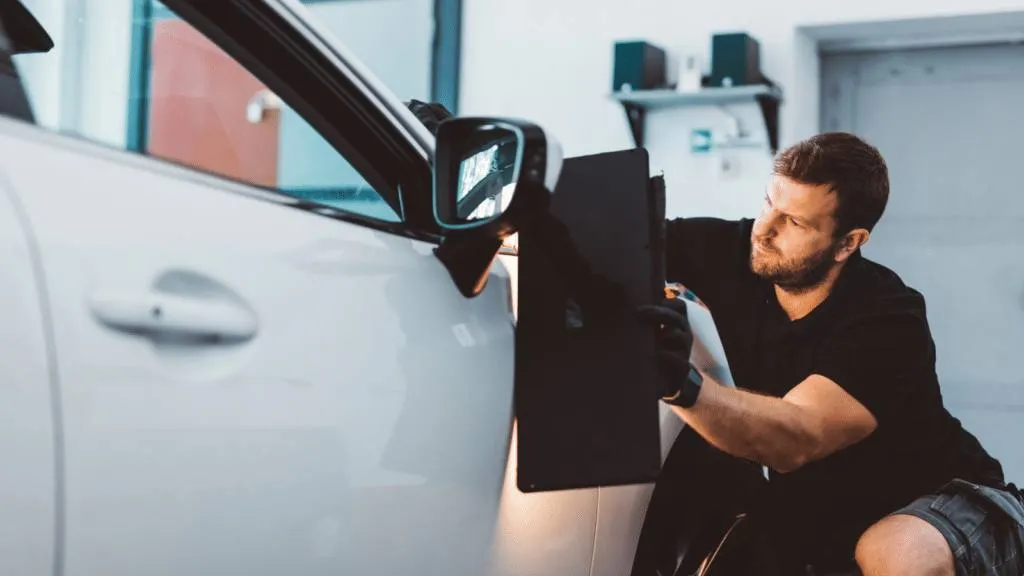
Hailstorms can leave your vehicle covered in small dents within minutes. While the damage may look minor at first glance, the repair method you choose can have a lasting impact on your car’s appearance and resale value. For many drivers, paintless dent repair, often called PDR, is the preferred solution after hail damage. One of the main reasons is that it preserves your original factory paint. Understanding how paintless dent repair works helps explain why it is often the smartest option for restoring your vehicle.
Table of contents
Estimated reading time: 5 minutes

How PDR Preserves Factory Paint
Paintless dent repair (PDR) helps maintain the factory paint job in several ways:
No need for repainting: The most obvious advantage is that it eliminates the need to repaint the damaged area. This preserves the original paint and avoids the problems associated with repainting, such as mismatched colors or additional costs.
No risk of overspray: There’s no risk of overspray getting on other parts of the vehicle, which can be a challenge when repainting a panel. Overspray can damage the factory paint and create more work to correct.
No sanding or grinding: PDR technicians use specialized tools to massage the metal back into shape without sanding or grinding, which can scratch or damage the factory paint.
No fillers or chemicals: PDR doesn’t involve the use of fillers, Bondo, or harsh chemicals that can damage the factory paint or harm the environment.
Preserves the factory clear coat: Since PDR doesn’t require sanding or grinding, the factory clear coat remains intact, maintaining the vehicle’s glossy finish and protecting the paint from the elements.
Maintains the factory warranty: Preserving the factory paint ensures that the vehicle’s warranty remains valid, as alterations to the paint job can sometimes void the manufacturer’s warranty.
Avoids paint fade: Repainting a panel can lead to paint fade over time, especially if the new paint doesn’t match the original perfectly. PDR avoids this issue altogether.
Overall, paintless dent repair is a safe and effective way to maintain the factory paint job while removing dents and dings from a vehicle.
The Importance of Factory Paint
The paint that goes on at the factory is done so in a controlled setting with specialized equipment and bake cycles that create a finish that is not easily matched at your typical body shop. While some repainting is done with excellent materials, there is a possibility of mismatched color, overspray, or different finishes. Many insurance companies and potential buyers see repainting as a repair that could impact resale value.
Some of the benefits of retaining the original factory finish include:
- Same paint color on all body panels
- Factory rust proofing
- Increased resale value
- Clean car fax report
Keeping the factory finish is the number one concern for most car owners when they have hail damage.
Advantages of Paintless Dent Repair
With paintless dent repair, we’re repairing the metal and not painting over the damage. In most hail damage incidents, the clear coat or paint surface remains intact. Technicians can push the dents out from the back side of the panel without disrupting the clear coat or color coat.
The process typically involves:
- Accessing the backside of the damaged panel
- Using specialized rods and tools to apply controlled pressure
- Gradually reshaping the metal to its original contour
- Inspecting the surface under professional lighting to ensure a smooth finish
The Long-Term Benefits of Preserving Factory Paint
Besides the obvious benefits to your vehicle’s appearance, choosing paintless dent repair also safeguards your investment in several key ways.
Preserves Resale Value
A car that still has its original paint job will usually be valued more than one that has been repainted. Buyers and dealers check to see if the paint job on a car is consistent and if it has been repaired. If the car still has its original paint job, it is a sign that the car has not had any major bodywork done on it.
Minimizes Downtime
Conventional dent repair can take anywhere from a few days to a couple of weeks, depending on how much sanding, priming, and repainting needs to be done. Paintless dent repair usually takes less time because it doesn’t involve refinishing.
Resource: consumer.ftc.gov
Avoids Filler and Paint Layers
The addition of body filler or repainting the vehicle can add extra layers to your car’s panels. Later on, these panels may react differently to heat, moisture, and sunlight. PDR helps to maintain the integrity and condition of your car as much as possible. Paintless dent repair can be the way to go if you need to repair a dent quickly, are concerned about the environment, or want to preserve your car’s original factory finish.
Why Experience Matters
It takes a lot of practice and the right tools to do paintless dent repair correctly. A good technician must know how the various metals used in cars will react to pressure, as well as how to reach the damaged areas without causing further damage to other parts of the vehicle. Certified Hail is a hail damage repair company that relies on time-tested and industry-approved PDR methods to repair vehicles without invading the paint. Lighting, tools, and inspection all come into play when ensuring that dents are safely removed from a vehicle’s surface without damaging the paint.
Final Thoughts
Hail damage is a superficial problem, but the technique used to repair it could impact your vehicle for years to come. Paintless dent repair provides a proven technique for removing dents without compromising the original finish that seals and gives your car its shine. If your vehicle sustained hail damage in the recent storm, contact Certified Hail to schedule an inspection.
Saturday by appointment only. We are closed Sundays and major holidays.