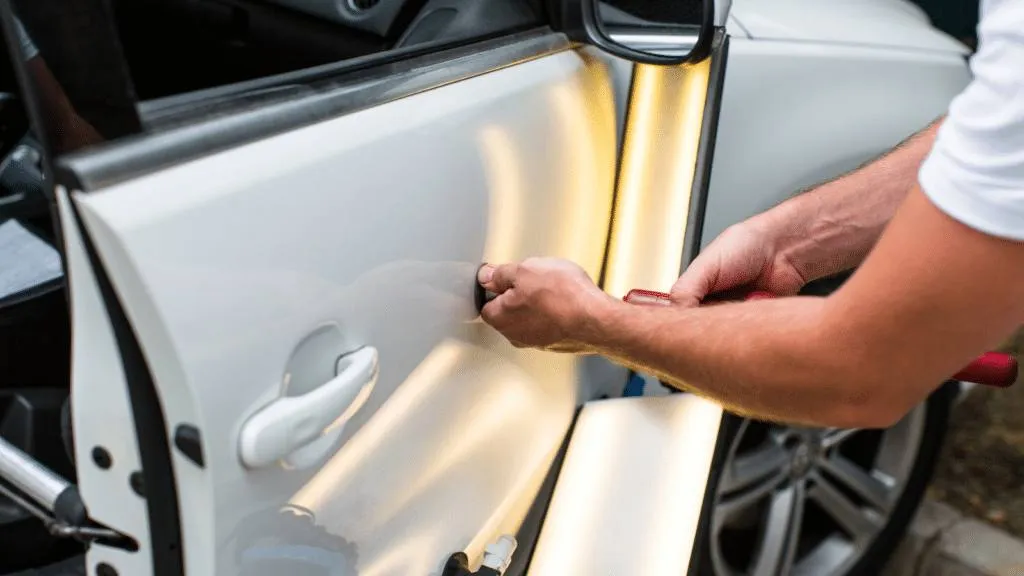
Hailstorms, minor collisions, or stray shopping carts can leave unsightly dents on your vehicle, disrupting its sleek appearance. Traditional dent repair methods often require costly and time-consuming procedures. However, Paintless Dent Repair (PDR) offers a faster, cost-effective, and eco-friendly solution. In this blog, we’ll explore what PDR is, its benefits, and how it works to restore your vehicle’s surface without compromising its original finish.
What Is Paintless Dent Repair (PDR)?
Paintless Dent Repair (PDR) is a specialized technique used to remove minor dents and dings from the body of a vehicle without the need for repainting or extensive bodywork. Unlike traditional methods that involve fillers and paint, PDR focuses on preserving the car’s factory finish. This makes it an ideal choice for minor hail damage, door dings, and other small imperfections.
Benefits of Paintless Dent Repair
- Cost-Effective: PDR is generally less expensive than traditional body shop repairs since it eliminates the need for paint, primers, and fillers.
- Time-Saving: Repairs can often be completed in a matter of hours, compared to the days or even weeks required for conventional repairs.
- Eco-Friendly: Since PDR avoids the use of chemical-based fillers and paint, it’s an environmentally friendly option.
- Maintains Resale Value: By preserving the vehicle’s original paint, PDR helps retain its resale value, ensuring a seamless finish.
Definition: Conventional
How Does Paintless Dent Repair Work?

The PDR process involves skilled technicians who use specialized tools to gently massage dents out of the vehicle’s surface. Here’s a step-by-step breakdown:
- Assessment of Damage: Technicians begin by evaluating the location and size of the dent. They also check the paint condition to ensure it hasn’t been cracked or damaged.
- Accessing the Dent: To reach the dent, technicians carefully remove panels, trim, or interior components if necessary. This allows them to access the dent from behind the affected area.
- Precise Dent Removal: Using specialized PDR tools such as metal rods and body picks, the technician applies controlled pressure to the underside of the panel, gradually working out the dent. For larger dents, they may use glue tabs to gently pull the dent outward.
- Quality Check: Once the dent is removed, the area is inspected under a light to ensure a smooth, flawless finish. Any minor imperfections are addressed until the surface is restored to its original state.
Types of Damage PDR Can Fix
Paintless Dent Repair is most effective for:
- Hail Damage: Small to medium-sized dents caused by hailstones.
- Door Dings: Marks left by car doors or other objects in parking lots.
- Minor Creases: Shallow dents with smooth edges.
- Bumps and Knocks: Caused by low-speed collisions or falling objects.
However, PDR may not be suitable for damage involving:
- Deep dents with sharp edges.
- Extensive paint damage or cracks.
- Panels with stretched or overly warped metal.
Why Choose Certified Hail for PDR?
At Certified Hail, we specialize in providing high-quality Paintless Dent Repair services. Our experienced technicians are equipped with the latest tools and techniques to ensure precision and customer satisfaction. Whether you’re dealing with hail damage or a minor ding, we can help restore your vehicle’s appearance quickly and affordably.
Saturday by appointment only. We are closed Sundays and major holidays.